National Biologics Facility

Case Studies

Real-world examples of how NBF has enabled Australian researchers to take biotherapeutic discoveries from the bench to first-in-human clinical trials.

The National Biologics Facility has supported dozens of programs across its 15+ year history. These case studies highlight three landmark projects that demonstrate NBF's end-to-end capabilities, from antibody engineering and process development through to Phase I clinical manufacturing.

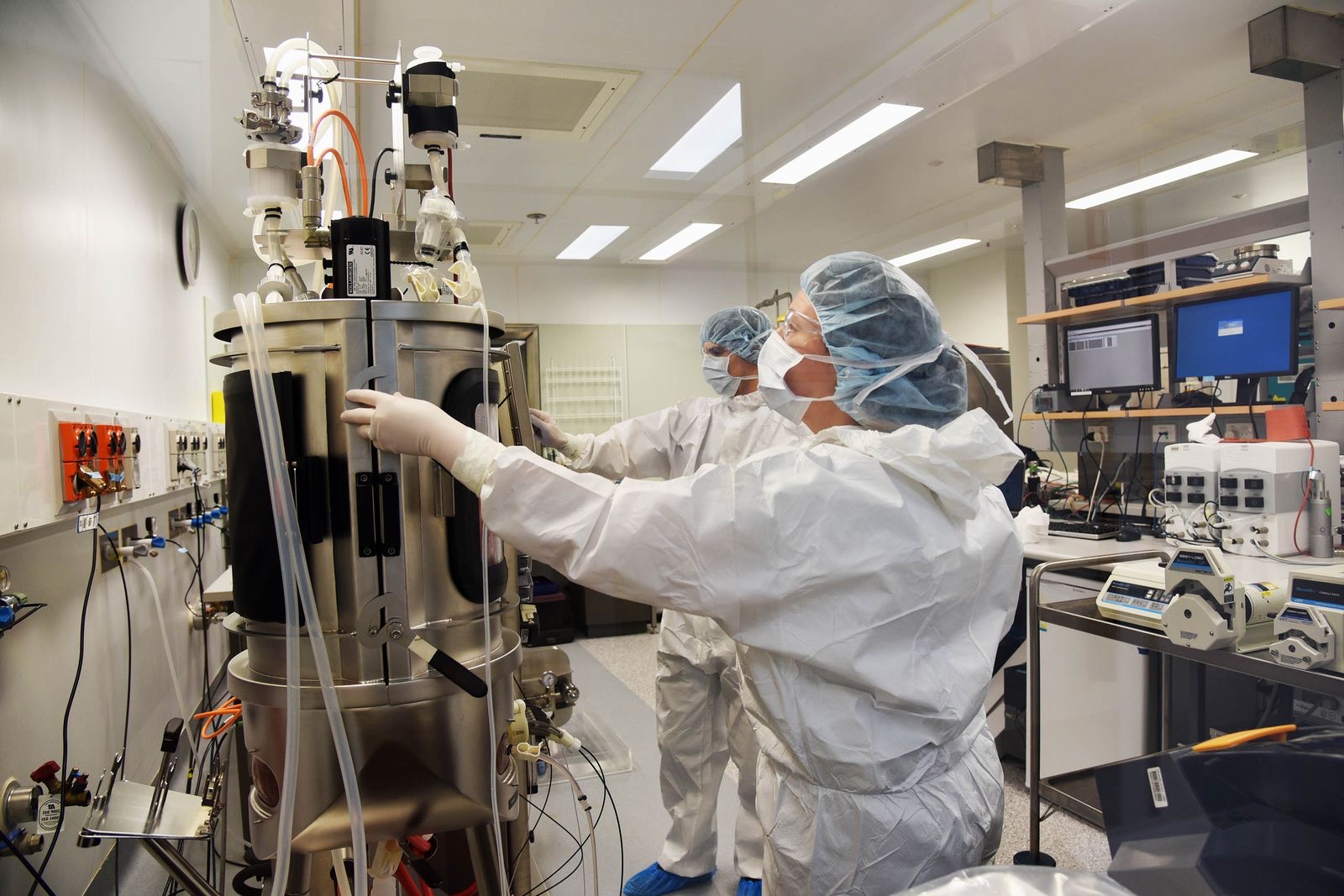
NBF bioreactor facility producing m102.4 antibody for Hendra virus
Outbreak Response

Hendra Virus Antibody m102.4

Post-exposure treatment for Hendra and Nipah virus infections

NBF has been continuously contracted by Queensland Health to produce and emergency-stockpile the anti-Hendra virus monoclonal antibody m102.4, the only known targeted, post-exposure treatment for both Hendra and Nipah virus.

Phase I
Clinical Trial
2
Deadly Viruses Targeted
Lancet ID
Published

The Challenge

Hendra virus is a deadly zoonotic pathogen transmitted from flying foxes to horses and occasionally to humans in Australia. Nipah virus, a closely related paramyxovirus, causes periodic outbreaks across South and Southeast Asia with case fatality rates exceeding 70%. No approved antiviral treatments existed for either virus.

NBF's Role

Originally developed by scientists at the US National Institutes of Health (NIH), the m102.4 monoclonal antibody was identified as a potent neutraliser of both Hendra and Nipah viruses. NBF was contracted to manufacture clinical-grade material for ongoing stockpiling and clinical evaluation.

  • Upstream process development and manufacturing of m102.4 at clinical scale
  • Downstream purification and formulation for clinical-grade drug substance
  • Bioanalytics package for release testing and stability
  • Continuous production campaigns for Queensland Health's emergency stockpile

Outcomes

The NBF team successfully completed a first-in-human Phase I clinical trial for m102.4, with results published in The Lancet Infectious Diseases. Beyond clinical trials, the antibody has been used under special access protocols to treat individuals following high-risk Hendra virus exposures in Australia and has been provided under humanitarian need into India during ongoing Nipah virus outbreaks.

Global Humanitarian Impact

From Queensland emergency stockpile to humanitarian deployment in India's Nipah outbreaks, m102.4 demonstrates how Australian manufacturing capabilities can address urgent global health threats.
View publication in The Lancet Infectious Diseases
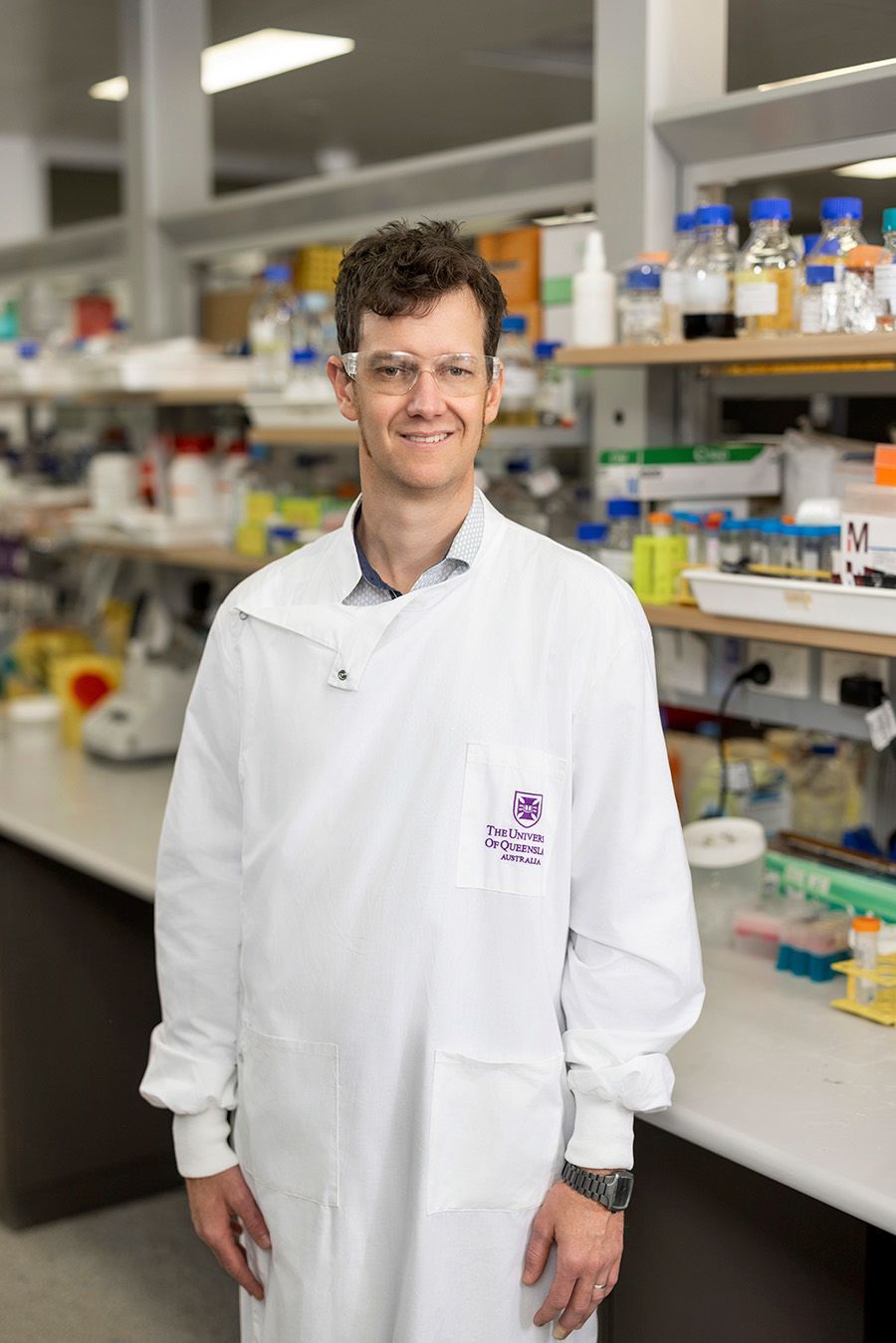
UQ Molecular Clamp vaccine platform researchers
Vaccine Platform

UQ Molecular Clamp Vaccine

From COVID-19 emergency response to $1.15B USD acquisition by Sanofi

When COVID-19 emerged in early 2020, NBF was central to the rapid development of UQ's protein-based subunit vaccine using the proprietary Molecular Clamp technology, a stabilisation platform now valued at over a billion dollars.

5.5 mo
Discovery to Dosing
2
Clinical Trials
>$1.15B
USD Acquisition

The Challenge

In January 2020, the emergence of SARS-CoV-2 demanded an unprecedented global vaccine response. UQ's Molecular Clamp, a recombinant protein-based subunit platform (~600 kDa spike trimer), had been developed as a rapid-response vaccine technology. What was needed was the manufacturing expertise to take it from laboratory concept to clinical-grade material in record time.

NBF's Role

Multiple TIA (Therapeutic Innovation Australia) nodes prioritised the project during the initial lockdown. NBF led the accelerated development effort:

  • Accelerated process development with novel capture affinity resin
  • Established a Phase I-enabling analytical package
  • Supported preclinical studies with 20L transient expression batches
  • Concurrent cell line development, stable pool clinical drug substance at 50L scale
  • First patient injected within 5.5 months of project initiation

Outcomes

The first clinical trial dosed its first participant within 5.5 months, a remarkable timeline for a novel biologic. A second clinical trial followed on a redesigned clamp antigen. The de-risking achieved through two NBF-enabled clinical trials was pivotal to the platform's commercial value.

UQ's Molecular Clamp technology was subsequently commercialised through spinout company Vicebio, which was acquired by Sanofi for over $1.15 billion USD, validating both the platform's potential and the critical role of Australian manufacturing infrastructure in creating globally significant biotherapeutic assets.

From Bench to Billion-Dollar Platform

The Molecular Clamp story demonstrates how Australian manufacturing capabilities can underpin globally significant commercial outcomes, from emergency pandemic response to a billion-dollar Sanofi acquisition.

View clinical trial publication in Journal of Infectious Diseases View publication in eBioMedicine Read the full Vicebio story
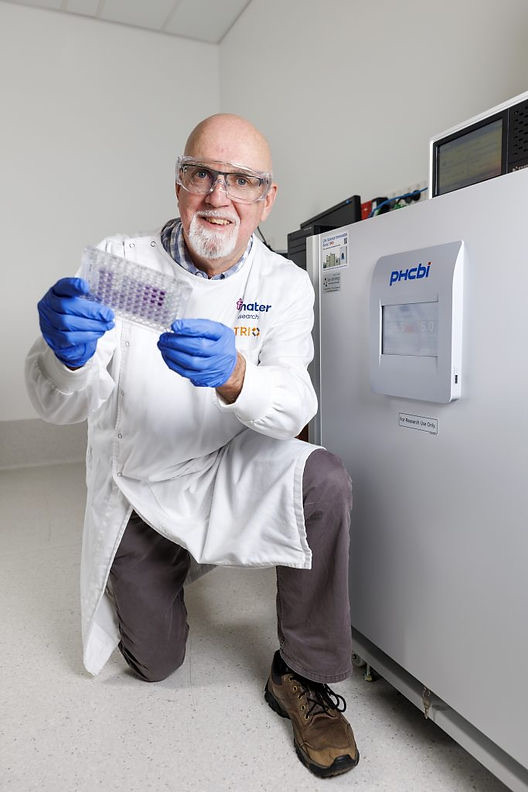
Ovarian cancer research and antibody theranostic development
Antibody Theranostic

10D7 Anti-CDCP1 Antibody

Targeted imaging and therapy for ovarian cancer

NBF enabled the complete translational journey of an anti-CDCP1 antibody from initial antibody engineering through to clinical-grade manufacturing for a first-in-human Phase 0/I trial, one of Australia's most comprehensive biologics translation stories.

5
Antibodies Evaluated
~3.5 g/L
Clone Titre
Phase 0/I
Clinical Trial

The Challenge

Ovarian cancer remains one of the most difficult cancers to detect and treat. CDCP1 (CUB domain-containing protein 1) was identified as a promising molecular target overexpressed on ovarian cancer cells. The goal was to develop an anti-CDCP1 antibody that could serve dual functions, as a diagnostic imaging agent via radiolabel conjugation and as a potential therapeutic.

NBF's Role

NBF provided the complete end-to-end biologics development pathway, covering every step from early-stage antibody evaluation through clinical manufacturing:

  • Evaluated 5 candidate antibodies for manufacturability, accelerated stability, SPR binding, and in vitro/in vivo performance
  • Isolated a stable clone of the lead candidate achieving approximately 3.5 g/L titre
  • Developed the full bioprocess and analytics package
  • Managed technology transfer from UQ NBF to CSIRO for DFO conjugation development
  • Completed clinical drug product batch manufacturing

Outcomes

The 10D7 project exemplifies a complete Australian biologics success story. Every step, from initial antibody discovery through to first-in-human trials: was conducted domestically, apart from a single toxicology study overseas. The clinical trial is now underway, evaluating the antibody for imaging of ovarian cancer patients.

National research infrastructure including NBF, the National Imaging Facility, and Therapeutic Innovation Australia were essential enablers, demonstrating how Australian capabilities can support seamless translational pathways without the need for offshore facilities.

End-to-End Australian Translation

The 10D7 program demonstrates that the entire antibody-to-clinic pathway can be completed domestically, a blueprint for future Australian biologics translation programs.

Read the full ovarian cancer story
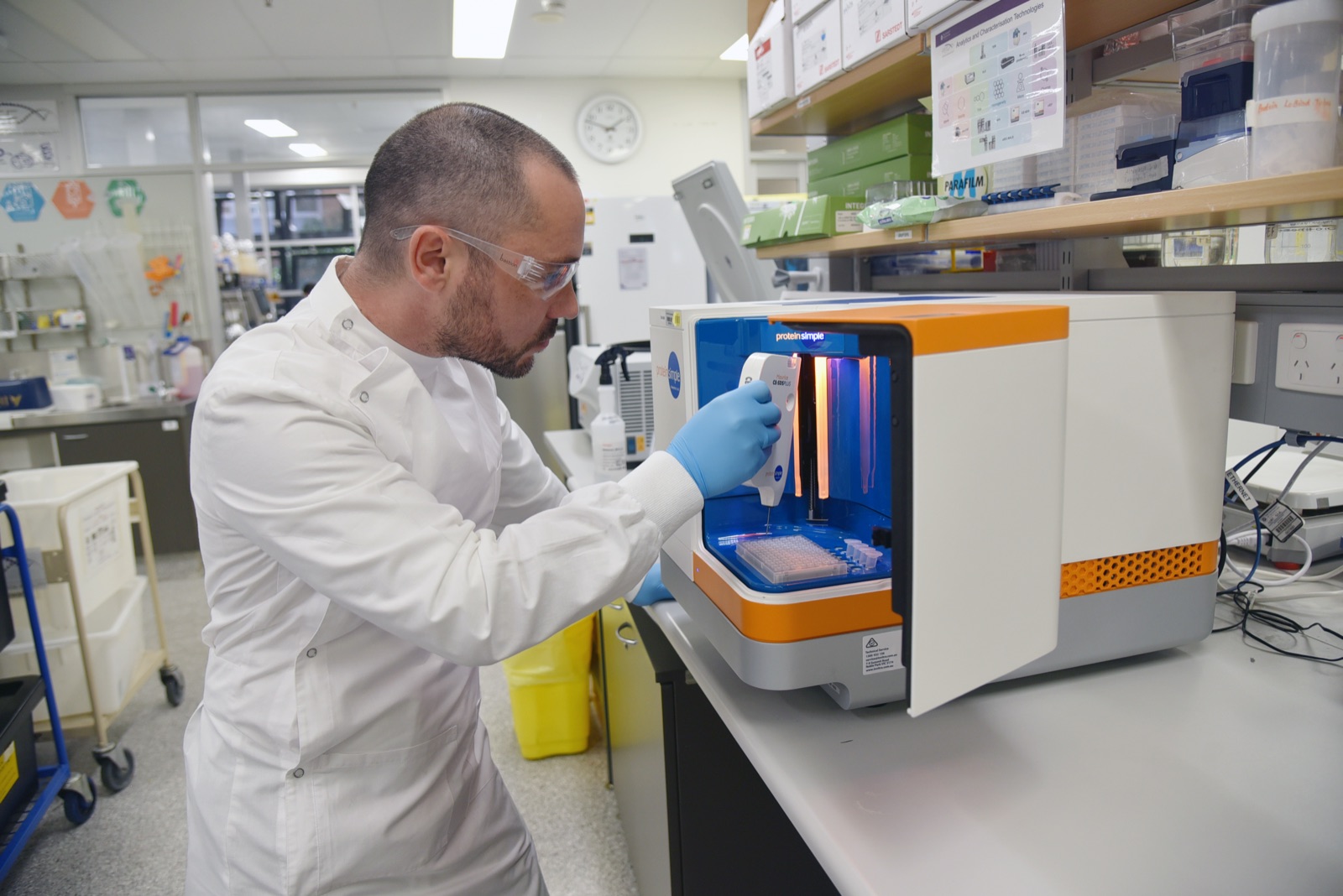
PEF scientist analysing recombinant malaria diagnostic proteins by capillary electrophoresis
Global Health Diagnostics

Malaria Diagnostic Proteins

Affordable, high-quality antigens powering malaria diagnostics worldwide

The Protein Expression Facility (PEF), now part of the National Biologics Facility (NBF), has manufactured recombinant malaria diagnostic proteins since 2021, supplying high-quality antigens at affordable cost to researchers, startups and global-health partners working to eliminate malaria.

5
Plasmodium Species Covered
280M+
Infections in 2024
Worldwide
Diagnostic Supply

The Challenge

Malaria caused more than 280 million infections across over 80 countries and more than 600,000 deaths in 2024. Accurate diagnosis is central to elimination, yet the most dangerous parasite, Plasmodium falciparum, has evolved to evade many of the rapid diagnostic tests used across Sub-Saharan Africa, while Plasmodium vivax often causes "silent", asymptomatic infections that create hidden reservoirs of disease. Developing more sensitive tests depends on a reliable supply of high-quality diagnostic proteins, which are often out of reach for researchers and small companies in resource-limited settings.

NBF's Role

The work began at UQ's Protein Expression Facility (PEF), which joined forces with NBF in 2026 and now operates under the NBF banner. Since 2021 the team has supplied diagnostic target proteins for all five species of the Plasmodium parasite, with particular focus on P. falciparum and P. vivax:

  • Produces recombinant diagnostic antigens covering all five Plasmodium species
  • Runs dedicated quality-control processes for malaria antigens
  • Supplies proteins worldwide for diagnostic test development and treatment research
  • Offers custom protein development tailored to each program
  • Provides reagents at affordable cost to startups, small companies and researchers with limited budgets

Outcomes

The facility's proteins have helped global-health partners including PATH, the Burnet Institute and WEHI design more sensitive diagnostic tests capable of detecting parasites that evade current rapid tests, supporting the surveillance and mass test-and-treat programs essential to malaria elimination. By keeping reagents affordable, the work extends equitable access to critical diagnostic tools well beyond well-resourced laboratories.

"We are supplying orders worldwide," said Dr Christian Fercher, who led the work at PEF and is now part of the NBF team. "These clients are often startups or small companies that don't have big budgets, and we are able to provide the proteins at a reasonable price."

Equitable Global Diagnostic Access

Affordable, quality-assured malaria antigens, now produced within NBF following the integration of PEF, give researchers and small companies worldwide the reagents they need to build better diagnostics for elimination.

Read the full malaria proteins story

Have a biologics program?

Whether you're at the discovery stage or ready for Phase I manufacturing, NBF can help you advance your biotherapeutic candidate to the clinic.

Get in Touch

NBF is proudly supported by

NCRIS Therapeutic Innovation Australia The University of Queensland