Discovery & Protein Engineering
NBF supports therapeutic discovery and offers expertise in antibody generation, nanobody discovery and phage display combined with protein and antibody engineering techniques, as well as bioconjugation.
Molecular and Structural Biology
Key to the project success is careful upfront design to optimise the expression plasmid for producing the therapeutic protein of interest. Expression cassette considerations include the choice of promoter, signal sequence for secretion, codon optimisation, and tags for purification or detection.
Located at the Australian Institute for Bioengineering and Nanotechnology (AIBN) at The University of Queensland, NBF brings deep expertise in molecular biology and structural analysis to support recombinant protein production from the earliest stages of biologics development. Our scientists apply rational protein engineering to accelerate therapeutic development timelines, ensuring that each construct is optimised for manufacturability before entering cell line development and downstream protein manufacturing workflows.
Protein and Antibody Engineering
Antibody engineering services include cloning of hybridoma sequences and production of chimeric antibodies, reformatting to antibody fragments (scFv or Fab) or from fragments to whole antibodies and production of bispecific antibodies and antibody fusions.
Modifications of the antibody constant region can be engineered to manipulate effector function and enhance antibody stability. The NBF can also provide advice on potential strategies for therapeutic development of "non-human" antibodies for further use.
NBF's protein engineering capabilities are tailored to the specific requirements of biopharmaceutical programs, whether the goal is improving binding affinity, enhancing thermal stability, or reducing immunogenicity. Our team guides clients through the critical decisions that shape successful biologics development, from humanisation strategies for monoclonal antibodies through to Fc engineering for optimised half-life and effector function in drug substance candidates.
Nanobody Discovery
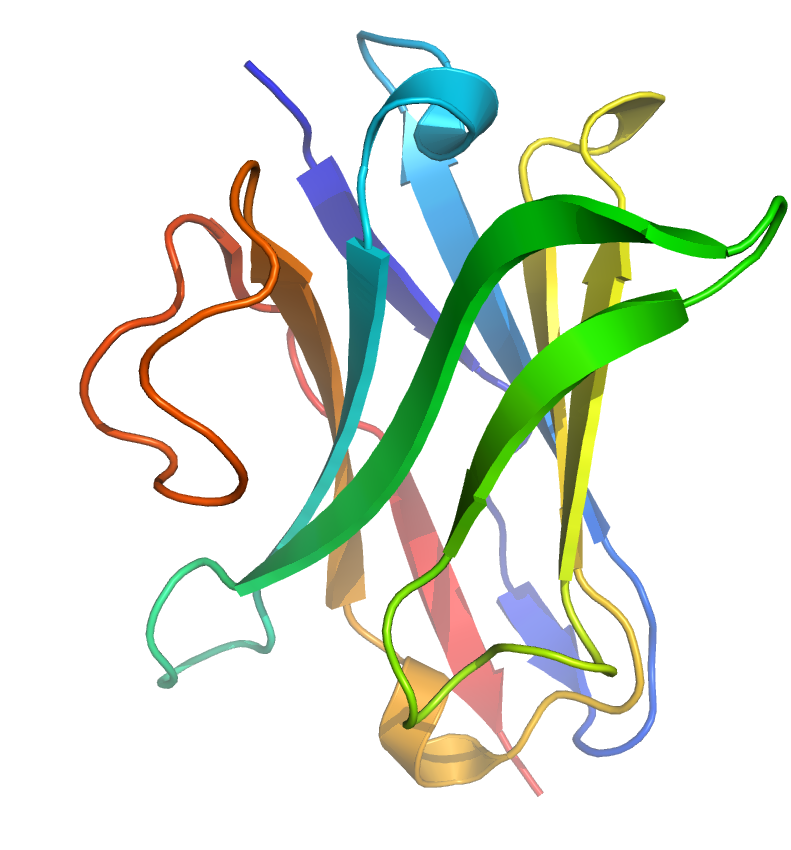
Nanobodies are single-domain antibody fragments derived from the heavy-chain-only antibodies of camelids. Their small size, high stability and ability to reach cryptic epitopes inaccessible to conventional antibodies make them valuable across therapeutics, diagnostics and structural biology. NBF discovers nanobodies by vaccinating alpacas against a target antigen, driving an affinity-matured immune response from which the antigen-specific single-domain repertoire is recovered.
These repertoires are screened using bacterial display, isolating high-affinity single-chain nanobodies through iterative rounds of selection and enrichment against the target. Lead binders are sequence-verified and can be reformatted, affinity-matured and produced recombinantly, feeding directly into NBF's integrated pipeline for recombinant protein production, characterisation and clinical-grade manufacturing.
Antibody Discovery by Phage Display
NBF provides antibody discovery services, utilising an in-house naïve human phage display scFv library. The facility has a track record in isolating antibodies against a variety of targets, including purified proteins, cell surface antigens and peptides. Once scFv fragments are isolated, these can be engineered into whole antibodies of various isotypes.
What sets NBF apart in antibody discovery is the combination of a high-diversity naive library with experienced scientists who can design biopanning campaigns optimised for challenging targets. Our phage display platform supports iterative rounds of selection and screening, enabling the identification of rare binders with therapeutic potential. This discovery capability feeds directly into NBF's integrated biologics development pipeline, where lead candidates can progress seamlessly into recombinant protein production, protein characterisation, and ultimately clinical manufacturing.
Ab-drug Conjugates and Bioconjugation
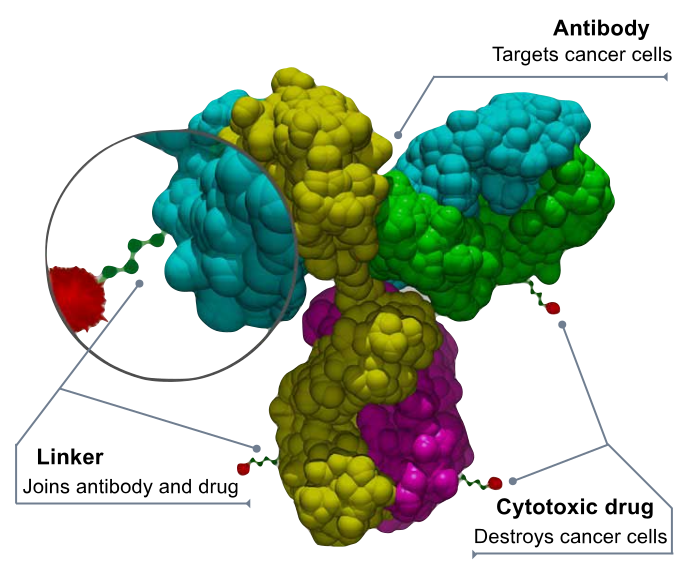
A novel and highly potent class of drugs known as antibody drug conjugates (ADCs) utilises molecular chemistry to combine potent small molecules with mAbs that can combine the advantages of both modalities.
In collaboration with the AMTAR ARC hub, NBF has ADC capabilities to generate effective strategies around the manufacture, chemical linker design, purification, and characterisation of similar radio-labelled or high potency bioconjugate molecules and diagnostics.
NBF's bioconjugation expertise extends across the entire ADC development lifecycle, from payload-linker selection through to conjugation chemistry optimisation and drug-to-antibody ratio analysis. Operating within a PC2 biosafety environment at AIBN, the facility is equipped to handle the specialised containment requirements of high-potency payloads. This end-to-end capability in both the biologic and chemical components of ADCs positions NBF as a uniquely integrated partner for next-generation therapeutic development in the biopharmaceutical space.